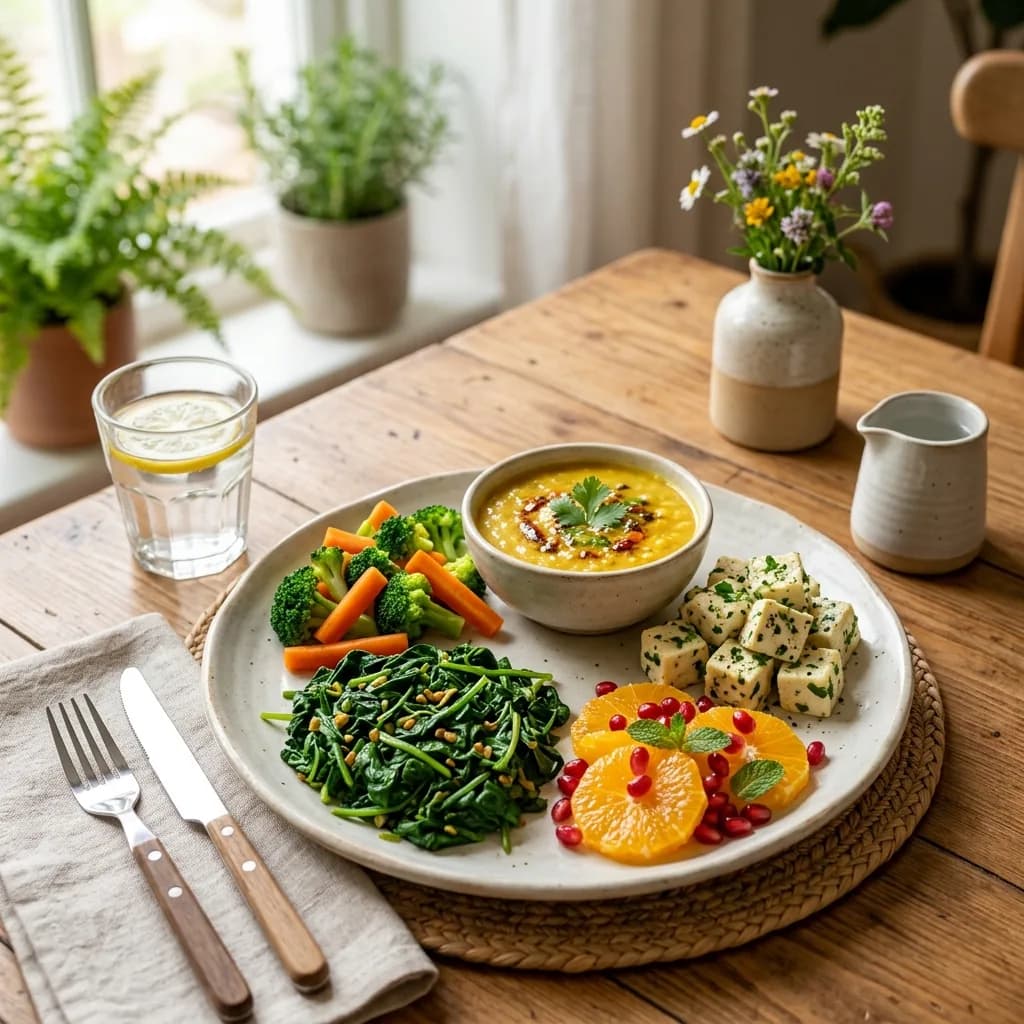
🥗 A balanced first-trimester plate: Rich in folic acid, high-quality proteins, iron, and vibrant fresh vegetables.
Pregnancy is a beautiful journey, and the first trimester is one of the most important stages for both mother and baby. During the first three months, the baby’s brain, spinal cord, heart, and other organs begin to develop. A healthy and balanced diet during this phase plays a major role in supporting proper growth and keeping the mother healthy.
“Doctors say that early pregnancy nutrition is not about ‘eating for two,’ but about eating the right foods in the right quantity.”
What Should You Eat During the First Trimester?
1. Folic Acid Rich Foods
Folic acid is extremely important during early pregnancy as it helps prevent birth defects related to the baby’s brain and spine.
Key Sources to Include:
2. Protein-Rich Foods
Protein helps in the baby’s tissue and organ development, providing the essential building blocks for cellular growth.
Key Sources to Include:
3. Iron-Rich Foods
Iron supports increased blood production and helps prevent anemia, ensuring oxygen is effectively transported to your growing baby.
Key Sources to Include:
Pro-Tip for Absorption:
Take iron-rich foods with lemon, oranges, or other Vitamin C sources. Vitamin C significantly boosts iron absorption in the body!
4. Calcium & Vitamin D
These nutrients help in building strong bones and teeth for the baby while protecting the mother's bone density. Daily sunlight exposure also helps maintain Vitamin D levels.
Key Sources to Include:
5. Fluids & Hydration
Morning sickness and vomiting can cause dehydration during early pregnancy. Maintaining electrolyte balance is crucial.
Hydration Options:
Foods to Avoid During First Trimester
Certain foods can increase the risk of infections, acidity, or complications during pregnancy. To ensure a safe environment for your developing baby, strictly avoid or limit the following:
Limit Spicy & Oily Food
Too much oily or spicy food may irritate your stomach lining and worsen common first-trimester symptoms:
Tips for Managing Morning Sickness
Morning sickness is incredibly common during the first trimester due to rising pregnancy hormones. Here are doctor-recommended tips to keep nausea at bay:
- ✓Eat small meals frequently throughout the day
- ✓Avoid staying hungry for long periods
- ✓Keep dry biscuits or crackers beside your bed
- ✓Eat light, warm, homemade food
- ✓Drink fluids slowly in sips between meals, rather than gulping large amounts at once
A Simple Healthy Pregnancy Plate
A perfectly balanced first-trimester meal doesn't need to be complicated. Every major meal should aim to include a colorful balance of:
Final Words
The first trimester is the foundation of a healthy pregnancy. Eating nutritious food, staying hydrated, and avoiding harmful substances can help support the healthy development of the baby and improve the mother’s wellbeing.
Every pregnancy is unique, and nutritional needs may vary from person to person depending on your medical history, weight, and specific blood reports.
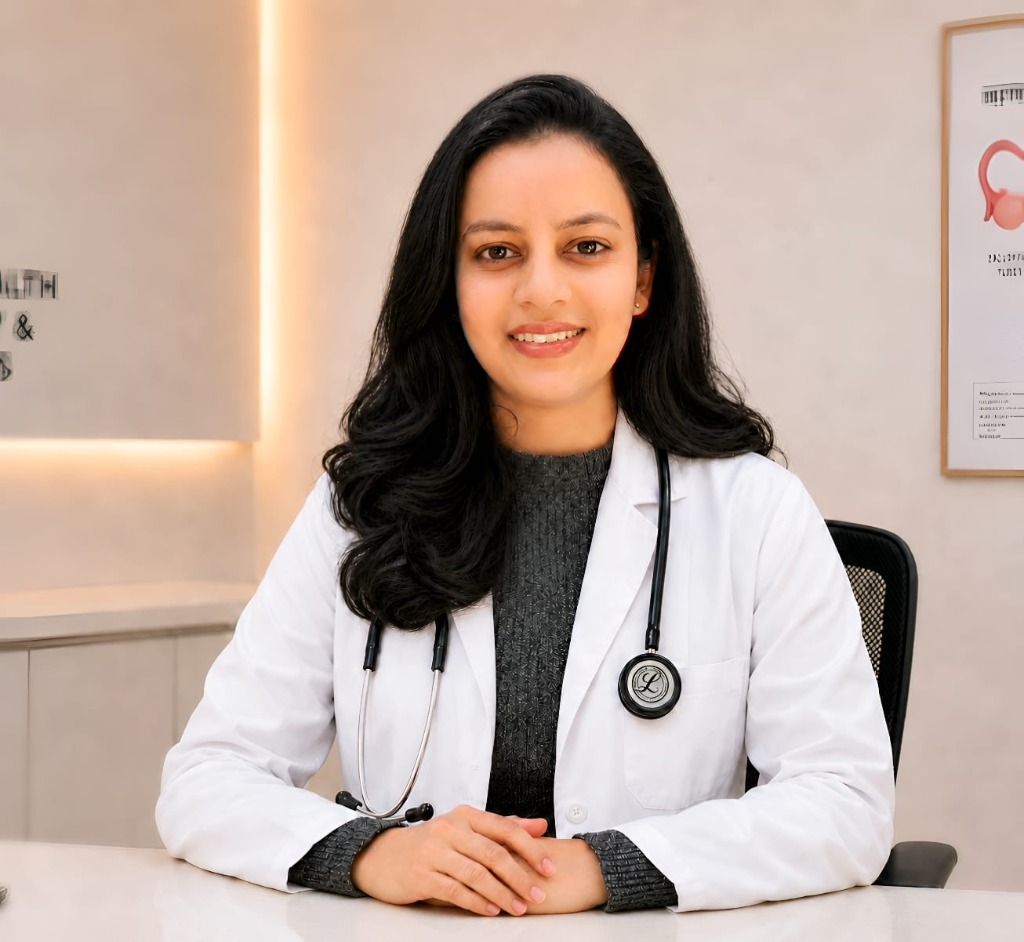
Need a Customized Pregnancy Diet Chart?
Consult Dr. Vaibhavi for a personalized first-trimester evaluation, advanced ANC checkups, and a tailored nutrition plan designed for your baby's optimal growth.